
There is no architect in history quite like Antoni Gaudí. His buildings don't just break the rules — they seem to exist in a different reality altogether. Inspired by nature, faith, and Catalan tradition, Gaudí created structures that look like they grew from the earth rather than being built upon it. Seven of his works are UNESCO World Heritage Sites, all in Barcelona.
If you're planning a trip to Barcelona — or simply fascinated by one of humanity's greatest creative minds — here's your guide to the buildings that make this city like no other.
The Major Works
La Sagrada Familia — The World's Most Extraordinary Church
Gaudí's life work, and arguably the most ambitious architectural project in history. Construction began in 1882, and Gaudí knew he would never see it finished. "My client is not in a hurry," he said, referring to God.
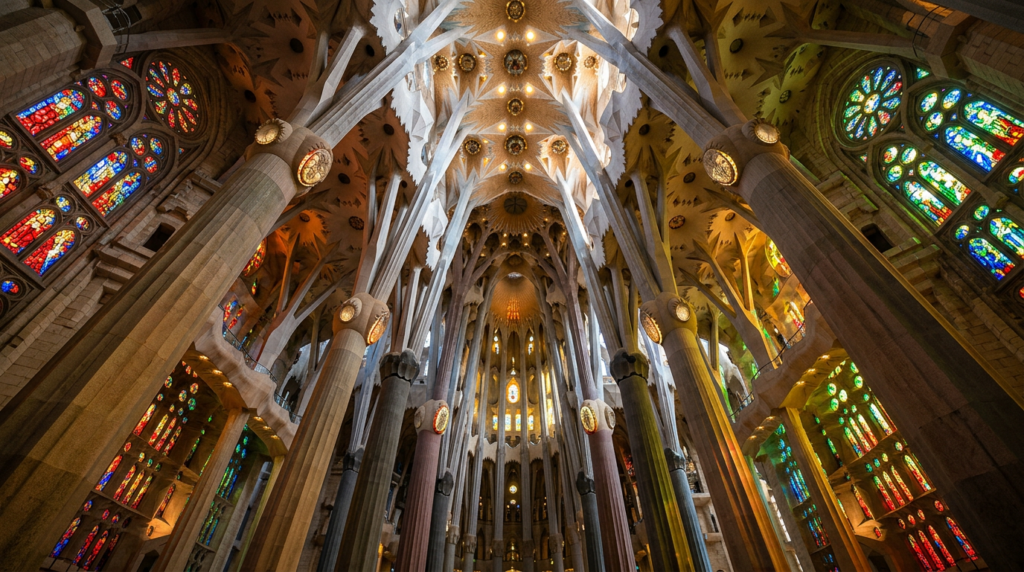
The basilica is designed as a "Bible in stone" — every facade, tower, and sculpture tells a biblical story. The interior is revolutionary: tree-like columns branch into canopies that distribute weight naturally, eliminating the need for flying buttresses. Sunlight streams through stained glass windows, painting the interior in shifting rainbows throughout the day.
The numbers:
- 18 towers (when complete) — 12 for the Apostles, 4 for Evangelists, 1 for the Virgin Mary, and the tallest (172.5m) for Jesus Christ
- Construction expected to be completed by 2026 — the centenary of Gaudí's death
- Over 4.5 million visitors per year
- UNESCO World Heritage Site since 2005
Park Güell — Nature as Architecture
Originally commissioned by industrialist Eusebi Güell as a luxury garden city for 60 houses, the project failed commercially — only 2 were ever built (Gaudí lived in one). But what remains is one of the most magical public parks in the world.
The park's iconic features:
- The Dragon Stairway — the mosaic salamander (El Drac) has become Barcelona's unofficial mascot
- The Serpentine Bench — the world's longest bench, covered in broken-tile mosaics (trencadís) with 360° views of Barcelona
- The Hypostyle Room — 86 columns supporting the terrace above, originally designed as a marketplace
- Gingerbread Gatehouses — inspired by the witch's house in Hansel and Gretel
Gaudí's genius was making the constructed look natural — the viaducts and walkways blend so seamlessly with the hillside that it's often hard to tell where the park ends and the mountain begins.
Casa Batlló — The Dragon House of Passeig de Gràcia
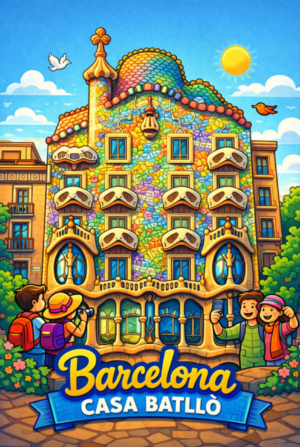
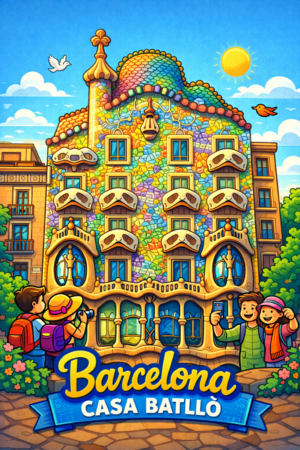
Gaudí's renovation of a conventional apartment building on Barcelona's most prestigious boulevard is a masterclass in imaginative design. The local legend says the building represents Saint George slaying the dragon — Catalonia's patron saint:
- The roof = the dragon's back (with shimmering ceramic scales)
- The tower cross = Saint George's lance
- The balconies = skulls of the dragon's victims
- The facade columns = bones
Inside, the ocean-themed blue light well, the mushroom-shaped fireplace, and the flowing organic forms of every room demonstrate Gaudí's belief that "the straight line belongs to man, the curve belongs to God."
Night visit recommended: Casa Batlló offers evening visits with live music and drinks on the rooftop terrace.
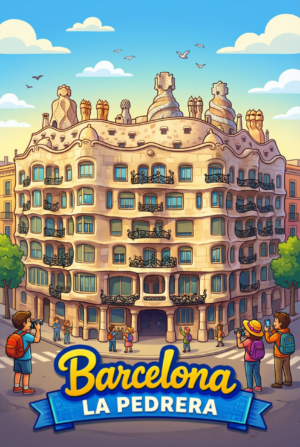
La Pedrera (Casa Milà) — The Stone Quarry
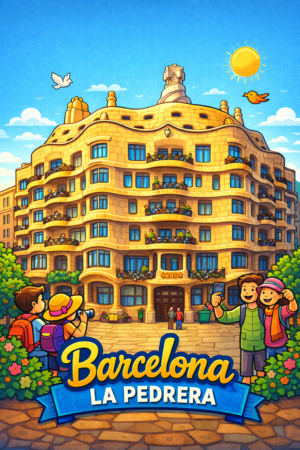
Gaudí's last residential project (1906–1912) before dedicating himself entirely to the Sagrada Familia. The undulating limestone and wrought-iron facade shocked Barcelona's bourgeoisie — they called it "La Pedrera" (The Stone Quarry) as an insult. Today, it's one of the city's most beloved buildings.
The rooftop is unforgettable: warrior chimneys — some resembling medieval knights, others looking like something from a science fiction film — stand guard over a surreal landscape with panoramic views of Barcelona and the distant Sagrada Familia.
The building has no load-bearing walls — an innovation that was revolutionary in 1912, allowing each floor's layout to be completely different.
Earlier Works
Palau Güell — Where Gaudí Found His Voice
This early Gaudí commission (1886–1890) for his patron Eusebi Güell already shows the hallmarks of his genius: parabolic arches, creative use of light, and a rooftop terrace with fantastical chimney sculptures covered in broken ceramics.
The central hall features a remarkable dome pierced with small holes, creating a starry sky effect during the day. It's less visited than the more famous works — making it a wonderfully peaceful Gaudí experience.
Casa Vicens — Gaudí's First House
Only opened to the public in 2017, this 1883 commission was Gaudí's first major work. The vivid Moorish-inspired tiles, geometric patterns, and colourful facade show a young Gaudí absorbing influences before developing his unique organic style.
Gaudí's Legacy: Why It Matters
Gaudí died in 1926 after being struck by a tram. He was so shabbily dressed that he was mistaken for a beggar and taken to a pauper's hospital. When he was finally identified, all of Barcelona mourned.
His legacy is extraordinary:
- 7 UNESCO World Heritage Sites in a single city
- Pioneer of biomimicry in architecture — 100 years before it became a trend
- His structural innovations (catenary arches, hyperboloid forms) are still studied by engineers today
- The Sagrada Familia's completion will mark 144 years of continuous construction
There's a process underway to beatify Gaudí — if successful, he would become the Catholic Church's first architect-saint.
Plan Your Gaudí Tour
Essential route (1 day): Casa Batlló → La Pedrera (walk 2 blocks up Passeig de Gràcia) → Park Güell (taxi/metro) → Sagrada Familia
Extended route (2 days): Add Palau Güell, Casa Vicens, and the Colònia Güell crypt (30 min outside Barcelona — Gaudí's "practice run" for the Sagrada Familia)
Budget tip: The "Casa Batlló + La Pedrera" combo ticket saves about 15% compared to buying separately.
Book ahead: All major Gaudí sites require timed tickets. Book 2+ weeks in advance, especially in summer.
Bring Gaudí Home
Gaudí's architecture is too extraordinary to leave behind in Barcelona. Our collection of Barcelona souvenir boards captures his most iconic works — from the Sagrada Familia's soaring towers to Park Güell's mosaic terraces.