
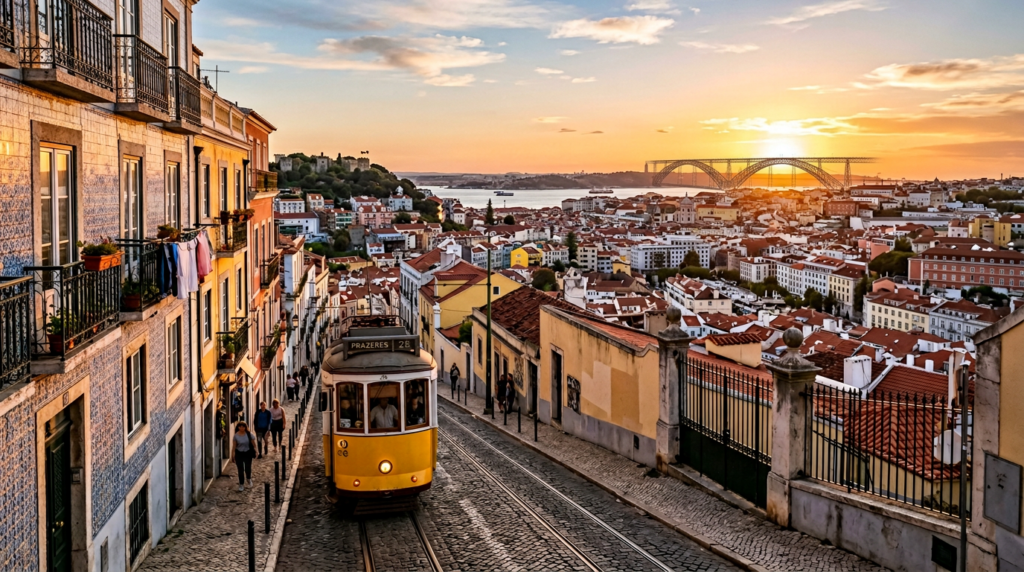
Portugal's two greatest cities couldn't be more different — yet both are irresistible. Lisbon, the sun-drenched capital perched on seven hills, radiates faded grandeur and creative energy. Porto, the gritty northern powerhouse, charms with its riverside warehouses, port wine cellars, and no-nonsense authenticity. Together, they make one of Europe's best city-break combinations.
Lisbon — City of Light & Tiles
Lisbon hits you with its beauty from the first moment. The city cascades down hillsides to the Tagus River estuary, its terracotta rooftops, azulejo-tiled facades, and pastel buildings glowing in a light that has inspired painters for centuries.
Alfama — Lisbon's Ancient Soul
Lisbon's oldest neighbourhood is a labyrinth of narrow, winding streets that survived the devastating 1755 earthquake. The sound of fado — Portugal's hauntingly beautiful music of longing (saudade) — drifts from tiny bars called casas de fado. The Castelo de São Jorge at the top offers panoramic views over the entire city and river.
Get lost in Alfama deliberately — every turn reveals a hidden viewpoint (miradouro), a tile-covered wall, or a neighbourhood cat sleeping in the sun.
Belém — Where Explorers Set Sail
This riverside district is where Vasco da Gama departed in 1497 to find the sea route to India — changing the world forever. The Torre de Belém, a UNESCO-listed Manueline fortress on the water, and the magnificent Jerónimos Monastery (also UNESCO) with its impossibly ornate carved cloisters are Portugal's most important monuments.
Don't leave Belém without trying the legendary Pastéis de Belém — custard tarts made from a secret monastery recipe since 1837. The queue is long. It's worth it.
Bairro Alto & Chiado
Chiado is Lisbon's elegant literary quarter — home to the famous Café A Brasileira (with a bronze statue of poet Fernando Pessoa outside), bookshops, and theatres. Next door, Bairro Alto transforms after dark into Lisbon's nightlife heart: hundreds of tiny bars in a grid of narrow streets where the party spills onto the pavement.
Connect the two neighbourhoods by riding the iconic Elevador da Bica or Tram 28 — the vintage yellow tram that rattles through Lisbon's most picturesque streets.
LX Factory & Modern Lisbon
Lisbon's creative renaissance is epitomised by LX Factory — a former textile factory transformed into a vibrant complex of restaurants, bookshops, galleries, and boutiques. The city has become one of Europe's hottest tech and startup hubs, with a youthful energy that contrasts beautifully with its ancient character.
Porto — Portugal's Northern Soul
Porto is raw, real, and utterly captivating. Where Lisbon is smooth and sun-kissed, Porto is rugged and atmospheric — a UNESCO World Heritage city of granite churches, baroque towers, and a waterfront that makes you catch your breath.
Ribeira — The Riverside Quarter
The Ribeira district along the Douro River is Porto's UNESCO-listed heart. Colourful houses stack up the hillside like a vertical village, medieval arches frame river views, and rabelo boats (once used to transport port wine barrels) bob in the water. At sunset, when the Dom Luís I Bridge is lit up and the waterfront restaurants buzz with life, Ribeira is pure magic.
Port Wine Cellars in Vila Nova de Gaia
Cross the spectacular Dom Luís I Bridge (designed by a student of Gustave Eiffel) to Vila Nova de Gaia, where the famous port wine lodges line the riverbank. Taylor's, Graham's, Sandeman, Cálem — all offer tours and tastings. A glass of tawny port on a terrace overlooking Porto at sunset is one of life's great simple pleasures.
Livraria Lello — The World's Most Beautiful Bookshop
With its crimson Art Nouveau staircase, stained glass ceiling, and carved wooden bookshelves, Livraria Lello is said to have inspired J.K. Rowling (she lived in Porto while teaching English and writing the first Harry Potter chapters). It's breathtaking — though very busy, so arrive early.
São Bento Station & Azulejo Hunting
São Bento Railway Station is decorated with over 20,000 hand-painted azulejo tiles depicting scenes from Portuguese history — it's essentially a free art gallery. Porto is the best city in Portugal for azulejo hunting: the Igreja do Carmo, Chapel of Souls (Capela das Almas), and countless facades throughout the city are covered in blue-and-white tiles.
Francesinha — Porto's Legendary Sandwich
Porto's signature dish: layers of ham, steak, and sausage between bread, covered with melted cheese and drenched in a spicy tomato-beer sauce, served with chips. It's outrageous, excessive, and completely addictive. Café Santiago and Capa Negra II are local favourites.
Lisbon vs. Porto: Which to Visit?
| Category | Lisbon | Porto |
|---|---|---|
| Vibe | Cosmopolitan, sunny, trendy | Gritty, authentic, proud |
| Architecture | Moorish + Manueline + Modern | Baroque + Granite + Azulejos |
| Food highlight | Pastéis de nata | Francesinha |
| Drink | Ginjinha (cherry liqueur) | Port wine |
| Nightlife | Bairro Alto bars | Galerias de Paris |
| Best view | Miradouro da Graça | Dom Luís I Bridge |
| Day trip | Sintra fairy-tale palaces | Douro Valley vineyards |
The answer: Visit both. A fast train connects them in just 2 hours 40 minutes.
Day Trips: Sintra & the Douro Valley
From Lisbon, Sintra is unmissable: a UNESCO landscape of fairy-tale palaces, enchanted forests, and Moorish castles just 30 minutes by train. The Pena Palace — painted in vivid red and yellow — looks like it belongs in a Disney film.
From Porto, take a boat or drive through the Douro Valley — a UNESCO-listed landscape of terraced vineyards cascading down to the river. Wine tastings at quintas (wine estates) with river views are a Portuguese highlight.
Plan Your Portugal Trip
Best time to visit: April–June and September–October (warm, dry, fewer tourists)
Getting there: Lisbon (LIS) and Porto (OPO) airports both have excellent European connections and are close to city centres.
Getting around: CP trains connect Lisbon and Porto (2h40 by Alfa Pendular). Metro systems in both cities are modern and affordable.
Budget tip: Portugal remains one of Western Europe's most affordable destinations. A coffee is €0.70, a glass of wine €2–3, and a generous lunch €8–12.
Must-try food: Pastéis de nata, bacalhau (salt cod — prepared 1,001 ways), sardinhas assadas, caldo verde, francesinha
Bring Portugal Home
Portugal's charm stays with you long after the fado fades. Our Portugal collection captures the beauty of this remarkable country — from coastal landscapes to traditional scenes.
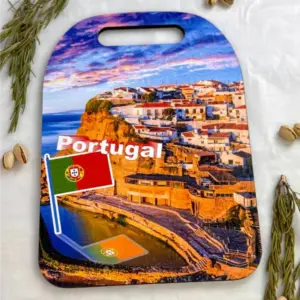
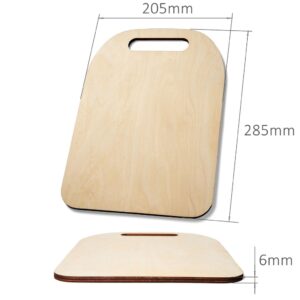
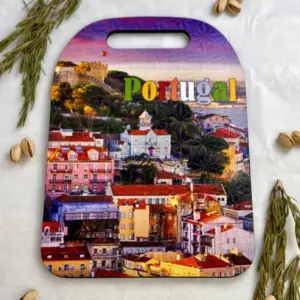
Browse all Portugal souvenir boards →
Lisbon, Porto, Sintra, and Douro Valley designs are coming soon!