
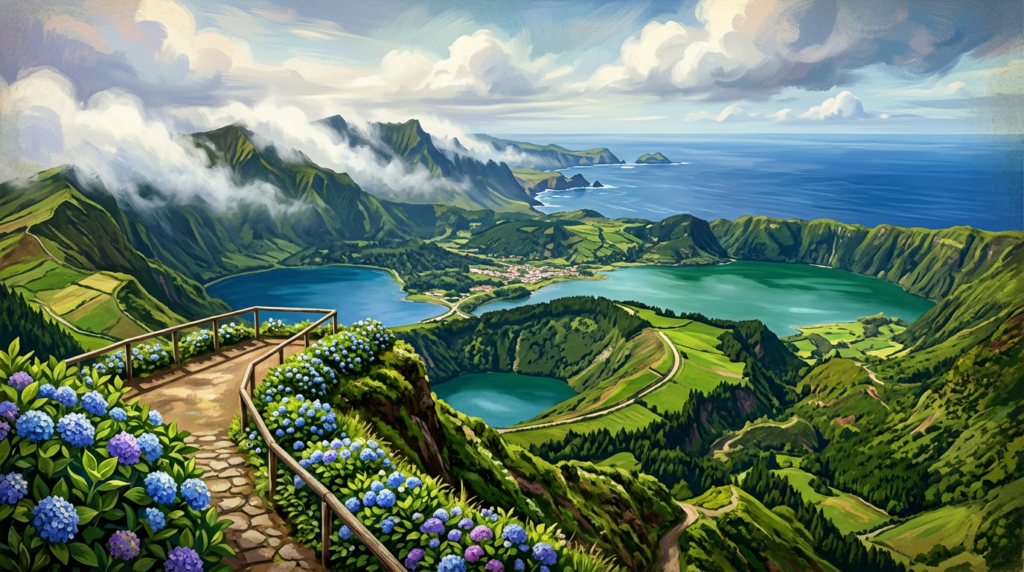
Rising from the deep Atlantic Ocean 1,500 km west of mainland Portugal, the Azores are Europe's best-kept natural secret. Nine volcanic islands form an archipelago of crater lakes, hot springs, lush green pastures, and dramatic coastal cliffs where whales breach and dolphins play. This is not the Portugal of city breaks and beach resorts — this is wild, raw, and breathtakingly beautiful.
Getting to the Azores
By air: Ponta Delgada (PDL) on São Miguel is the main gateway, with direct flights from Lisbon (2.5 hours), Porto, London, Boston, Toronto, and several European cities. SATA Azores Airlines and Ryanair offer competitive fares. Inter-island flights connect all nine islands (20-60 minutes).
Island hopping: Ferries run between the central group islands (Faial, Pico, São Jorge) in summer. For maximum flexibility, combine flights and ferries. Most visitors focus on São Miguel (the largest) and Terceira, adding Pico or Faial for a deeper experience.
Sete Cidades — The Twin Lakes
The most iconic image of the Azores: two lakes — one blue, one green — nestled inside a massive volcanic caldera on São Miguel. The Vista do Rei (King's View) lookout offers the famous postcard perspective, best seen in early morning before clouds fill the crater.
Legend says the lakes were formed by the tears of a princess (green) and a shepherd (blue) forbidden to love each other. Science says the colour difference comes from the varying depth and algae content — but the legend is more beautiful.
Hike it: The Mata do Canário trail (4 km, moderate) leads through misty forest to the crater rim. Alternatively, drive or take a tour — the winding road through hydrangea-lined lanes is spectacular.
Furnas — Earth's Kitchen
The Furnas Valley on São Miguel is where you feel the volcanic power beneath your feet. Steaming fumaroles hiss from the ground, bubbling mud pools gurgle with geothermal energy, and the sulphuric smell reminds you that this island is very much alive.
The highlight is Terra Nostra Park — a botanical paradise where you can soak in an ochre-coloured thermal pool (35-40°C) surrounded by giant palm trees, cycads, and 600+ plant species. Bring dark swimwear — the iron-rich water stains light fabrics!
Taste tradition: Cozido das Furnas is a legendary stew cooked underground for 6 hours using volcanic heat. Watch locals lower pots into steaming holes by the lake at dawn and retrieve them at lunchtime — the result is tender, flavourful, and utterly unique.
Pico Island — The Mountain & The Vineyard
Mount Pico (2,351m) is Portugal's highest peak — a perfect volcanic cone that pierces through the clouds. The sunrise hike to the summit (7-8 hours round trip, challenging) rewards climbers with views across the entire archipelago. On clear days, you can see neighbouring Faial, São Jorge, and even Graciosa.
At sea level, Pico holds another wonder: a UNESCO-listed vineyard landscape where grapes have been grown in small stone-walled enclosures (currais) for centuries. The volcanic basalt walls protect the vines from ocean winds, creating a unique microclimate that produces distinctive Pico wines — try the Verdelho white.
Whale Watching — Giants of the Deep
The Azores are one of the world's premier whale watching destinations, with 28 species of cetaceans recorded in these waters. Sperm whales are resident year-round, while blue whales — the largest animals ever to have lived — pass through in spring (March-May).
Tours depart from most islands, but Pico and Faial have the strongest tradition — Pico was the last whaling station in the Atlantic (ceased in 1987), and former whalers now serve as expert spotters. A typical half-day tour (€55-65) also encounters dolphins, sea turtles, and sometimes even orcas.
Angra do Heroísmo — The UNESCO City
On Terceira Island, the historic port city of Angra do Heroísmo is the Azores' cultural heart and a UNESCO World Heritage Site. Colourful Renaissance and Baroque buildings line the protected harbour, with the massive São João Baptista Fortress (one of the largest in the world) guarding the bay.
Climb Monte Brasil — the volcanic cone at the edge of the city — for panoramic views, then explore the underground volcanic caves at Algar do Carvão (a cathedral-like lava tube). Terceira is also famous for its Impérios (colourful Holy Spirit chapels) and the wild touradas à corda (rope bull runs) in summer.
Practical Tips for the Azores
- Best time: June-September for warmest weather and whale watching. April-May for hydrangeas in bloom and blue whale season
- Pack layers: The weather changes constantly — "four seasons in one day" is the local saying
- Rent a car: Essential on every island (from €30/day). Roads are good but winding
- Minimum stay: 4-5 days for São Miguel alone, 7-10 days for multi-island
- Try: Cozido das Furnas, Queijadas da Vila (sweet cheese pastries), Pico wine, fresh tuna steaks
- Sustainability: The Azores is Europe's first certified sustainable destination — respect the pristine environment
Bring the Azores Home
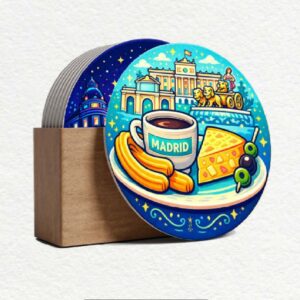
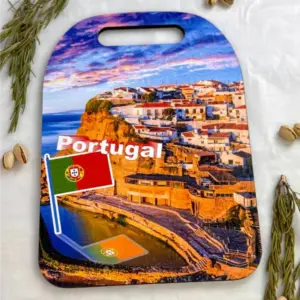
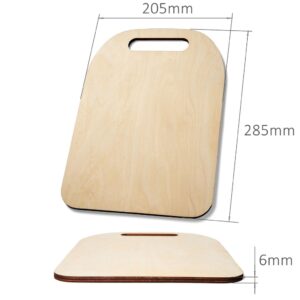
The twin crater lakes, the breaching whales, the volcanic hot springs — the Azores is a place that changes how you see the world. Our MemBoards souvenir cutting boards capture the wild beauty of these volcanic islands in stunning artistic detail.