
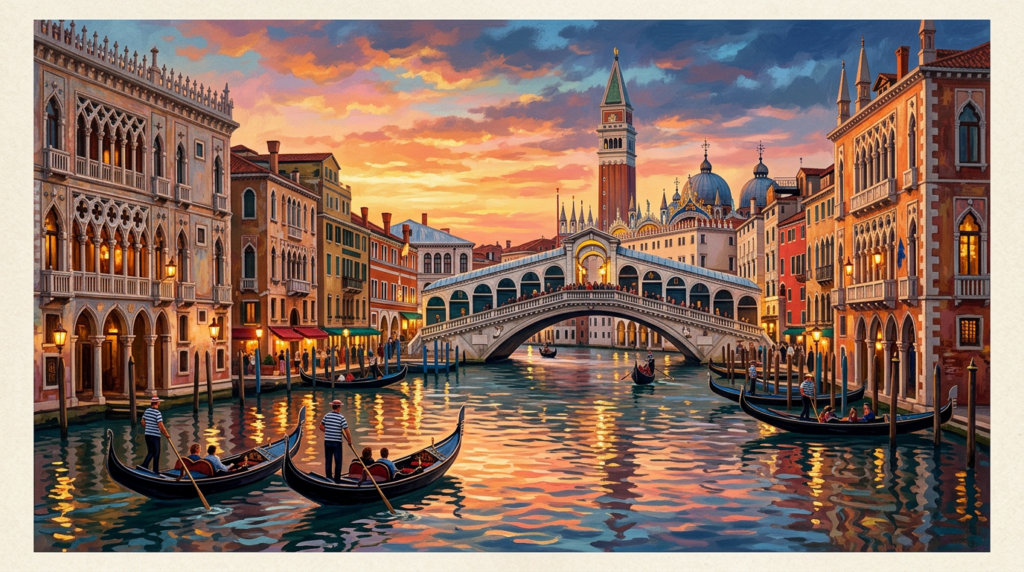
There is no city on Earth like Venice. Built on 118 islands connected by 400 bridges across a lagoon, this floating masterpiece of Byzantine, Gothic, and Renaissance architecture has no roads, no cars — only canals, gondolas, and footpaths that wind through a thousand years of history. With its carnival masks, Murano glass, and the haunting beauty of water meeting marble, Venice is the most extraordinary city in Europe.
Getting to Venice
By train: Venezia Santa Lucia station sits on the Grand Canal itself — step off the train and you're in Venice. High-speed trains from Rome (3.5 hours), Florence (2 hours), Milan (2.5 hours). By air: Marco Polo Airport (VCE), connected by water bus (Alilaguna, €15, 1 hour) or bus to Piazzale Roma (€8, 20 min).
The Grand Canal
Venice's main "street" is the Canal Grande — a 4-km S-shaped waterway lined with over 170 palaces spanning 500 years of architecture. Take Vaporetto Line 1 (€7.50, 45 minutes) for the full experience: the marble facades of Ca' d'Oro, Ca' Rezzonico, and Palazzo Grassi glide past like a living art gallery. The Rialto Bridge (1591) spans the canal at its narrowest point, lined with jewellery and leather shops.
Piazza San Marco — The Drawing Room of Europe
Napoleon called it "the finest drawing room in Europe." St. Mark's Square is Venice's heart — the stunning Basilica di San Marco with its five Byzantine domes and 8,000 square metres of gold mosaics, the soaring Campanile bell tower (99m — take the lift for lagoon views), and the Gothic Doge's Palace with its Bridge of Sighs. The arcaded cafés (Caffè Florian, since 1720) offer the most atmospheric espresso in Italy — at eye-watering prices.
Getting Lost — Venice's Greatest Pleasure
Put away your phone and get deliberately lost. Venice's magic lives in the labyrinth — hidden campi (squares) where children play football against 800-year-old walls, tiny bridges over silent canals, local bacari (wine bars) serving cicchetti (Venetian tapas) for €1-2 each. The neighbourhoods of Dorsoduro, Cannaregio, and Castello are far less crowded than San Marco and infinitely more authentic.
Murano, Burano & Torcello
The lagoon islands are essential Venice experiences:
- Murano — the glass-blowing island where master artisans have crafted glass for 700 years. Watch a demonstration at a fornace (glass factory) and browse galleries
- Burano — the most colourful island in the world, with houses painted in dazzling primary colours and a tradition of intricate lace-making
- Torcello — Venice before Venice, a haunting near-deserted island with a 7th-century cathedral containing stunning golden mosaics
Practical Tips
- Vaporetto pass: €25 for 24 hours (unlimited water bus rides) — pays for itself quickly
- Gondola: €80 for 30 minutes (official price, up to 6 people). Most romantic at dusk. Or take a €2 traghetto (gondola ferry) across the Grand Canal
- Eat like a local: Skip tourist restaurants near San Marco — head to Cannaregio for honest trattorie and cicchetti bars
- Acqua alta: Venice floods occasionally (October-January) — hotels provide boots, and raised walkways appear. It's part of the experience!
- Best time: Late September-November or February-March (Carnival). Summer is extremely crowded
Bring Venice Home
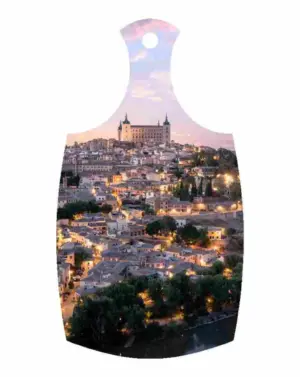
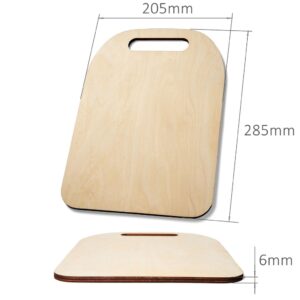
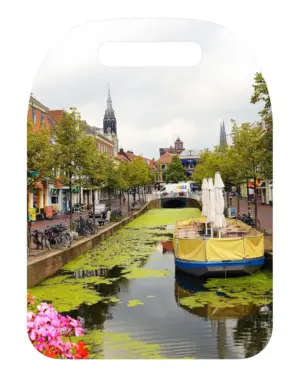
The gondolas on the Grand Canal, the golden mosaics of San Marco, the colourful houses of Burano — Venice is a dream made real. Our MemBoards souvenir cutting boards capture the floating city's magic in every detail.