
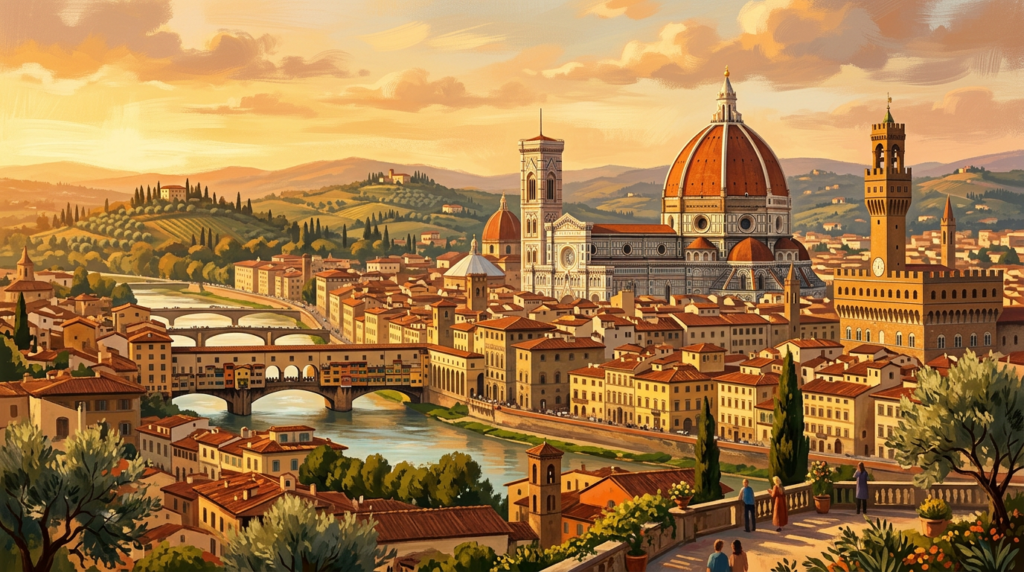
Florence — the birthplace of the Renaissance, the city of Michelangelo, Leonardo, and Botticelli, and home to the greatest concentration of art per square kilometre on Earth. This compact Tuscan jewel on the Arno River draws over 10 million visitors a year with its magnificent dome, world-class museums, and streets where every corner reveals 500 years of artistic genius.
Getting to Florence
By train: Florence Santa Maria Novella (SMN) is the central station. High-speed Frecciarossa trains from Rome take just 1.5 hours (from €20), from Milan 1 hour 40 minutes, from Venice 2 hours. By air: Florence Airport (FLR) is small; Pisa Airport (PSA, 1 hour by train) has more international connections.
The Duomo — Brunelleschi's Impossible Dome
The Cattedrale di Santa Maria del Fiore dominates Florence's skyline with its massive terracotta-red dome — an engineering miracle that was the largest dome in the world for 500 years. Brunelleschi built it without scaffolding using a double-shell technique that still astounds engineers today. Climb 463 steps to the top for vertigo-inducing views inside the frescoed dome and a Florentine panorama.
Don't miss Giotto's Bell Tower (414 steps, arguably better views than the dome) and the stunning Baptistery with Ghiberti's "Gates of Paradise" — gilded bronze doors so beautiful that Michelangelo said they deserved to be the gates of heaven.
The Uffizi Gallery
The Uffizi is the world's most important collection of Renaissance art. In chronological order, you trace the evolution from medieval gold-ground paintings to the revolutionary works of Botticelli (The Birth of Venus, Primavera), Leonardo (Annunciation), Raphael, Caravaggio, and Titian. Book tickets online (€20+€4 booking) — the queue without them can be 4+ hours in summer.
Ponte Vecchio — The Living Bridge
Florence's Ponte Vecchio (1345) is the oldest bridge in the city and one of the most photographed in the world. Its medieval stone arches are lined with jewellery shops that overhang the Arno River — gold, silver, and precious stones glittering in windows that have been here since the 16th century. The Vasari Corridor runs above the shops — a secret passage connecting the Uffizi to Palazzo Pitti.
Michelangelo's David
At the Galleria dell'Accademia, Michelangelo's David (1504) stands 5.17 metres tall — a masterpiece of human anatomy and artistic ambition carved from a single block of Carrara marble. The level of detail is astonishing — veins in the hands, tension in the muscles, the famous contemplative gaze. Tickets: €12, book online to skip the queue.
Piazzale Michelangelo — The Golden Hour View
Cross the Arno and climb to Piazzale Michelangelo for the definitive Florence panorama — the Duomo, Palazzo Vecchio, Ponte Vecchio, and the Arno valley spread before you. Come at sunset when the city glows in Tuscan gold. Bring a bottle of Chianti and join the locals.
Practical Tips
- Florence Card: €85 for 72 hours — covers all major museums including Uffizi and Accademia, plus transport
- Food: Try bistecca alla fiorentina (massive T-bone steak), lampredotto (tripe sandwich — braver than it sounds!), and gelato at Vivoli or La Carraia
- Day trips: Siena (1.5 hours), Pisa (1 hour), San Gimignano (1.5 hours), Chianti wine country
- Best time: April-May or September-October — warm but manageable crowds
Bring Florence Home
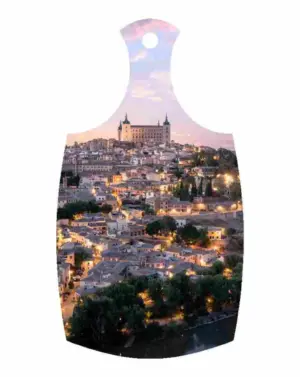
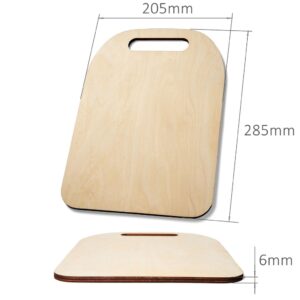
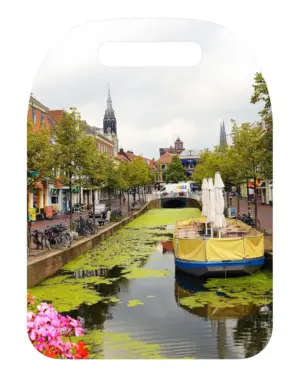
The soaring dome, the golden bridges, the Renaissance masterpieces — Florence is a city where beauty is not decoration but identity. Our MemBoards souvenir cutting boards capture the Tuscan magic in vivid artistic detail.