
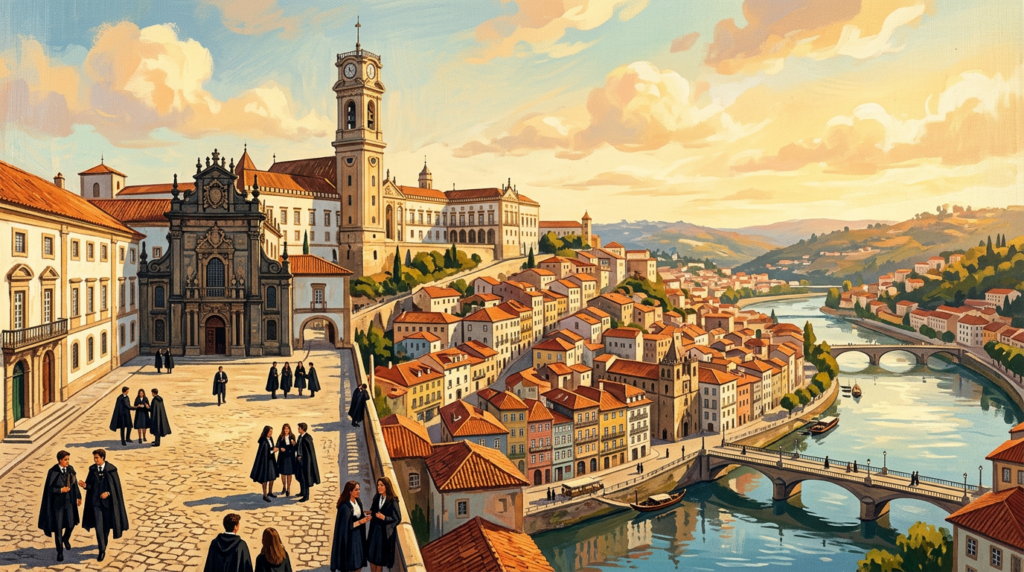
Coimbra is Portugal's city of knowledge — home to one of the world's oldest universities (founded 1290), a UNESCO World Heritage Site that has shaped Portuguese culture, language, and law for over 700 years. With its medieval hilltop campus, the jaw-dropping Joanine Library, its own unique style of fado music, and a vibrant student culture, Coimbra offers something no other Portuguese city can match.
Getting to Coimbra
By train: Coimbra-B station is on the main Lisbon-Porto line. Alfa Pendular trains reach Coimbra from Lisbon in 1 hour 40 minutes (from €20) or from Porto in 1 hour 10 minutes (from €15). A local shuttle connects Coimbra-B to the central Coimbra-A station (5 min).
The University — A City Above a City
The University of Coimbra occupies the hilltop above the old city, centred around the magnificent Pátio das Escolas (Schools Courtyard) with panoramic views over the red-roofed city to the Mondego River. The courtyard is dominated by the Torre da Universidade (University Tower), whose bells have regulated student life since the 18th century.
The undisputed highlight is the Biblioteca Joanina — one of the most beautiful libraries in the world. Three interconnected rooms feature Baroque gold-leaf bookshelves, painted ceilings, Chinese-inspired lacquerwork, and dark jacaranda wood. A colony of bats lives behind the bookshelves, feeding on insects that would otherwise damage the 300,000 ancient volumes.



Student Traditions & Fado de Coimbra
Coimbra's students are famous for their black capes (traje académico) — the same academic dress that inspired J.K. Rowling's Hogwarts robes. During the Queima das Fitas festival (May), students burn the ribbons of their faculty in a week-long celebration that is Portugal's biggest student party.
Fado de Coimbra is distinct from Lisbon's melancholic fado — here it's traditionally sung by male students in their black capes, often as serenades beneath balconies. The music is more lyrical and academic in tone. The best time to hear it is during the Serenata Monumental on the steps of the Sé Velha.
Sé Velha — The Fortress Cathedral
The Sé Velha (Old Cathedral, 1184) is one of the finest Romanesque buildings in Portugal — its fortress-like exterior with crenellated roofline reflects the warlike times of the Reconquista. Inside, the Renaissance retábulo (altarpiece) is gilded magnificence, and the Gothic cloister offers peaceful respite.
Mosteiro de Santa Cruz
On the bustling Praça 8 de Maio, the Monastery of Santa Cruz holds the tombs of Portugal's first two kings — Afonso Henriques and Sancho I. The Manueline-style portal, the ornate pulpit, and the exquisite Manga Cloister with its Renaissance fountain make this a must-visit.
Practical Tips
- Half day or full day: The university, old town, and key churches can be covered in 4-6 hours
- Buy combined tickets: University + Joanine Library + Chapel + Prison (€12.50)
- Best café: Café Santa Cruz — in a former chapel with vaulted ceilings and live fado on weekends
- Combine with: Conimbriga Roman ruins (30 min south) — one of the best-preserved Roman cities in the Iberian Peninsula
Bring Coimbra Home
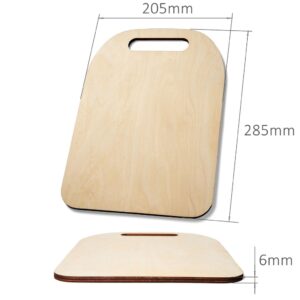
The golden library, the black-caped students, the ancient cathedral on the hill — Coimbra is a city where knowledge and beauty intertwine. Our MemBoards souvenir cutting boards capture the spirit of Portugal's most intellectual city.